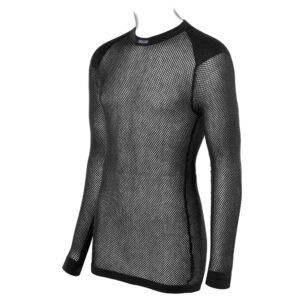
I connected with Brynje at the end of January and received a few pieces to try out in mid to late February. With that timing, and a relatively mild Montana winter, I haven’t had many opportunities to fully test them in the conditions they’re designed for. I was able to take the mesh base layer and hat out for a long day of late-season ski touring, but I’d ideally like to test it during something like winter camping where you get both high-output movement and periods of stillness. That may have to wait until next year with how quickly this season is ending.
Warmth & Layering
From what I’ve experienced so far, this isn’t a standalone base layer in the traditional sense. Instead of acting like a typical solid (non-mesh) base layer that provides warmth on its own, it works best as part of a winter layering system. With the warmer temperatures this season, I’ve been wearing it as my base layer, then adding a midlayer (my old base layer) and a shell if needed.
Used this way, it adds warmth without much bulk, which is especially useful for high-output activity where you want to stay warm without overheating or feeling restricted.
Early Impressions
Because I’ve had limited time to test the base layer in truly cold + high-output conditions, I don’t yet have a strong read on breathability, which is one of the main selling points of this type of base layer. I do notice the added warmth, but need more time to evaluate the breathability. This feels like a piece that needs more consistent cold weather and movement to fully evaluate.
That said, I did notice better breathability with the hat, which makes me curious to continue testing the base layer in more demanding conditions.
Gear Notes
Hat: This has been turned into my go-to winter hat. It does seem more breathable than other winter hats to the point I don’t notice it. Most winter hats leave me too sweaty, so I take them off and then immediately feel cold which becomes a constant on/off cycle. I haven’t noticed that as much with this one, which has been a nice change.
Mesh base layer: Works best as part of a layering system. I’ve found it does add good warmth without the bulky restrictive feel, but I’ll need more time to fully assess its breathability.
Sports bra: The fit didn’t work as well for me, especially for a smaller chest, so this may depend on body type. It seems like it would work better for me if the shoulder straps were tighter.