GearHelpful

Hot Tent Camping Gear for Winter: What Actually Works in Montana

We’ve been hot tent winter camping in Montana since 2021, and we’re still using the same tent we started with. If winter camping sounds intriguing but also a little intimidating, and the idea of a hot tent feels like the bridge between curiosity and comfort, this article is for you.

This isn’t just a list of gear to buy. It’s a mix of what we’ve learned through experience, along with the gear choices that have helped make winter camping more comfortable, safer, and genuinely enjoyable.

Why Hot Tent Camping Changes Winter Gear Decisions

Hot tent camping can sound dreamy: a warm tent glowing in the snow, a stove crackling while the wilderness sits quietly outside. And honestly, it often is like that. But we always plan our gear assuming the stove will go out at some point in the night.

Hot tent camping also involves more setup than summer camping. You need enough space for the tent, you’ll likely dig out a snow pit, and the tent itself takes a bit more finesse than a standard frame tent.

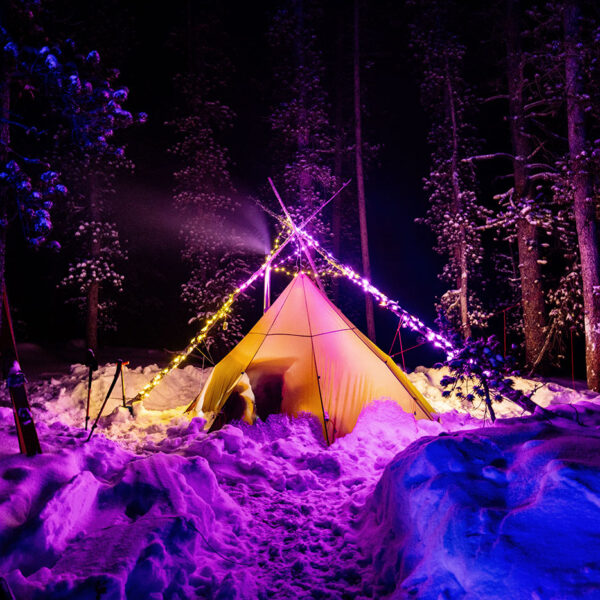
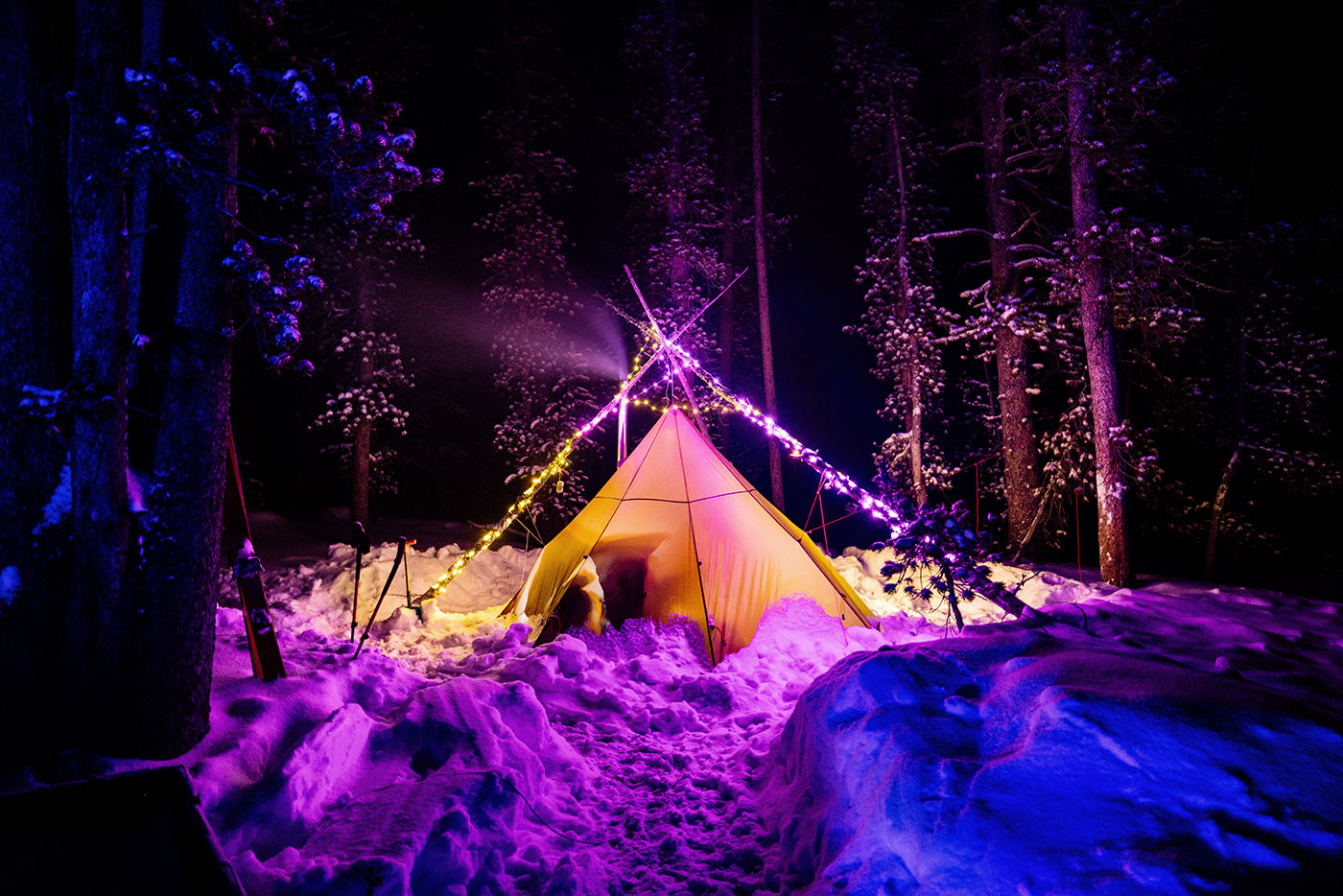
Our festive winter hot tent before the holidays
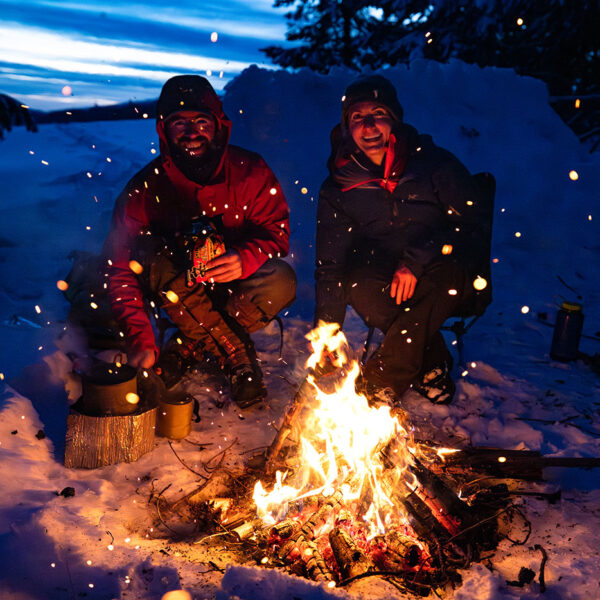
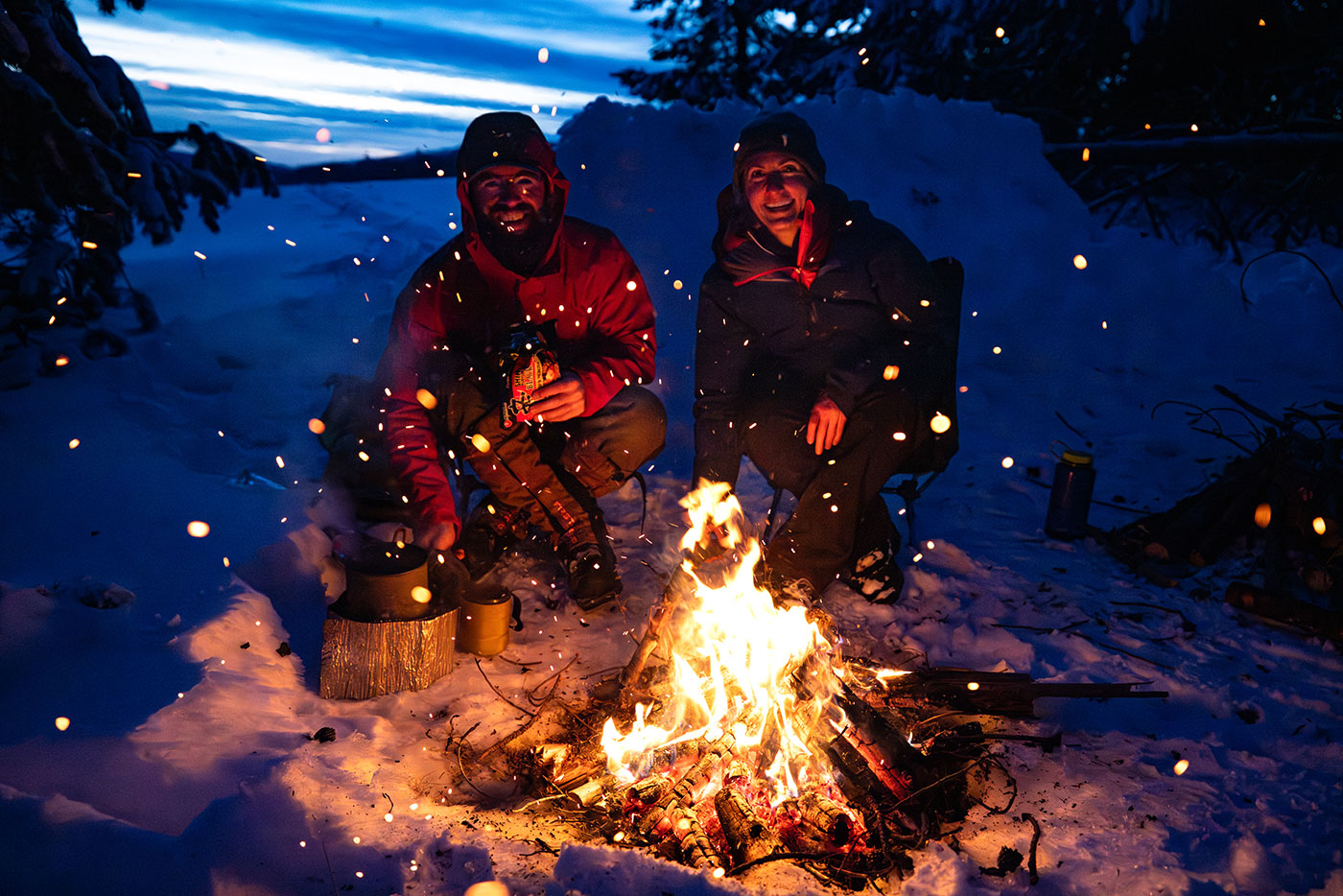
Winter camp cooking and having fun with the outdoor fire

Choosing a Hot Tent + Stove Setup (What We’d Buy Again)

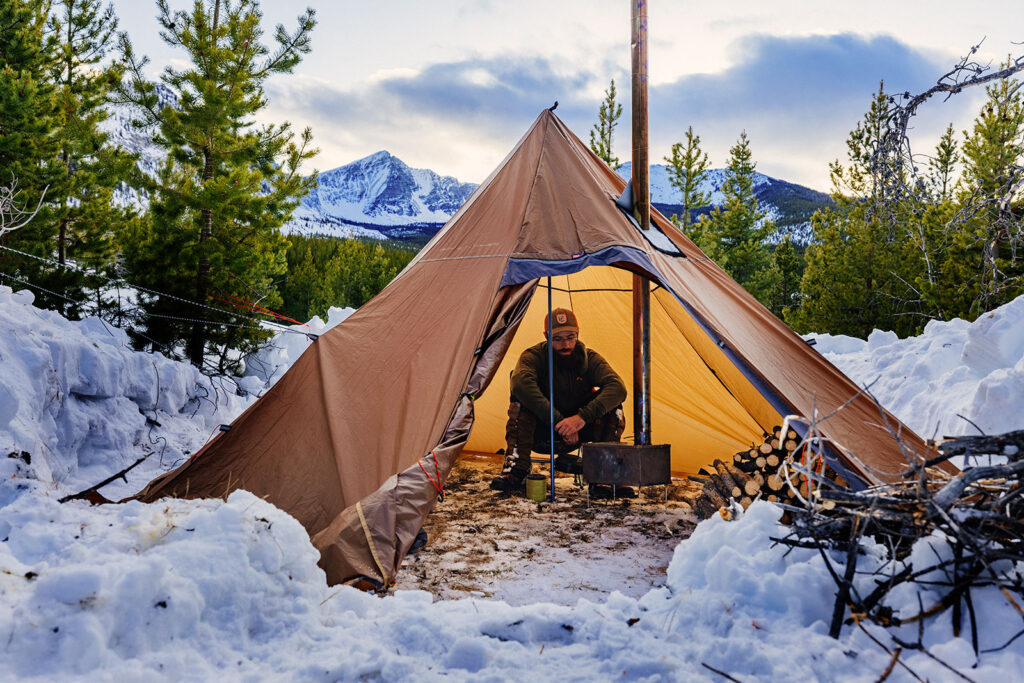
A simple, packable teepee-style shelter keeps winter trips flexible.
Our tent is held up using either the center pole provided by the manufacturer or a few lodgepole pine poles we find on site to create a teepee-style structure to hang the tent from. We chose this particular hot tent because it was relatively affordable and light enough to carry in a backpack, which keeps our winter trips from being limited to roadside camps. Tying it out is important to make the most space inside the tent. Usable space matters more than you’d think, not just for sleeping but for sitting in the tent during the evenings.

Stove burn time matters more than weight.
Stove choice has been one of our biggest learning curves. Our first stove was lightweight but only held a fire for about an hour. It worked, but it meant colder nights and more frequent wake-ups. Our current stove can burn for two to three hours, which has made a noticeable difference in comfort and sleep. Even so, we always plan our systems assuming the stove will go out. The stove adds comfort, but it’s never something we rely on completely.

Single-wall tents will create condensation in winter.
Since our tent is single-wall, condensation is inevitable in winter. The temperature difference between the warm interior and the cold outside air creates moisture along the walls, so we keep a small towel handy to wipe it down. Mitch has even rigged a simple plastic drop cloth along the outer edge to act as a makeshift double wall, preventing sleeping bags from brushing directly against the wet or frosted tent wall.

Hot Tent Gear Recommendations

Stove (previous): 3RG Titanium Wood Stove (4 lb 9 oz, ~1-hour burn time)

Stove (current): Kni-Co Trekker Stove (10.5 lb, ~2–3 hour burn time)

Tent: Octopeak Winter Shelter (4-person, 4 lb 4 oz ) + F8 Footprint (You’ll need a footprint to put your sleeping system on)

Heavy-Duty Steel Pegs: We use 10″ steel pegs (ours are from Murdoch’s), but the key is choosing a stake sturdy enough to withstand being pounded into frozen ground.

Sleep Systems: Planning for 2 a.m., Not Bedtime

We leave our sleep systems packed away until just before bed. It keeps the tent more spacious and comfortable during the evening hours, especially when you’re sitting around the stove or constantly going in and out of the tent. It also helps keep sleeping bags and pads protected from moisture while you’re tracking in snow.

Insulation rating matters more than tent warmth.
When it’s time to sleep, we plan for overnight conditions, not how warm it feels at bedtime. Our sleep systems are always rated for outside temperatures, regardless of how long the stove burns.

A hot water bottle helps bridge the cold gap.
One trick that made a big difference for when we were using the first stove, is the hot water bottle. We use a tight-sealing bottle like a Nalgene, fill it with hot water, and put it in the sleeping bag before bed. It won’t stay warm all night, but it holds heat for several hours. That extra warmth helps buffer the drop in temperature once the stove goes out, and can buy you a little more comfortable sleep before the cold fully settles in.

Dry layers at night are non-negotiable.
We always change into fully dry base layers before bed. Socks get swapped before crawling into the sleeping bag, no matter the season, and having dry layers reserved for sleeping makes a noticeable difference.

We rely heavily on merino wool base layers for both daytime activity and sleep. Merino regulates temperature well, continues insulating even if slightly damp, and is naturally odor-resistant. They’re practical when you’re wearing the same layers for setup, camp chores, and overnight. As a natural fiber, it also avoids the microplastic shedding associated with many synthetics.

Avoid cotton in winter. It holds moisture and can accelerate heat loss once you stop moving.

Sleep Gear Recommendations

Valerie: Sea to Summit Ether Light XR Pro (R-value 7) + Feathered Friends Murre 0° bag. Adds Enlightened Equipment Puffy Torrid Pants for extra warmth. Rotates merino wool base layers, with Ortovox’s Merino Baselayers being the recent go-to (they tend to run a size small, so consider sizing up).

Camp Gear That Actually Improves Winter Life

Once the tent is set up, collecting and processing enough firewood becomes the next priority. We always err on the side of overestimating how much we’ll need and make sure to include enough for the following morning. No one wants to wake up cold, collect firewood in the cold, and then build a fire… in the cold.

Firewood processing: For firewood processing, we stick with tools we trust: a Silky saw paired with a hatchet.

Lighting during long winter nights: A reliable headlamp and extra batteries are absolutely worth the weight for peace of mind. We’ve brought extra light to hang in the top of the hot tent as well.

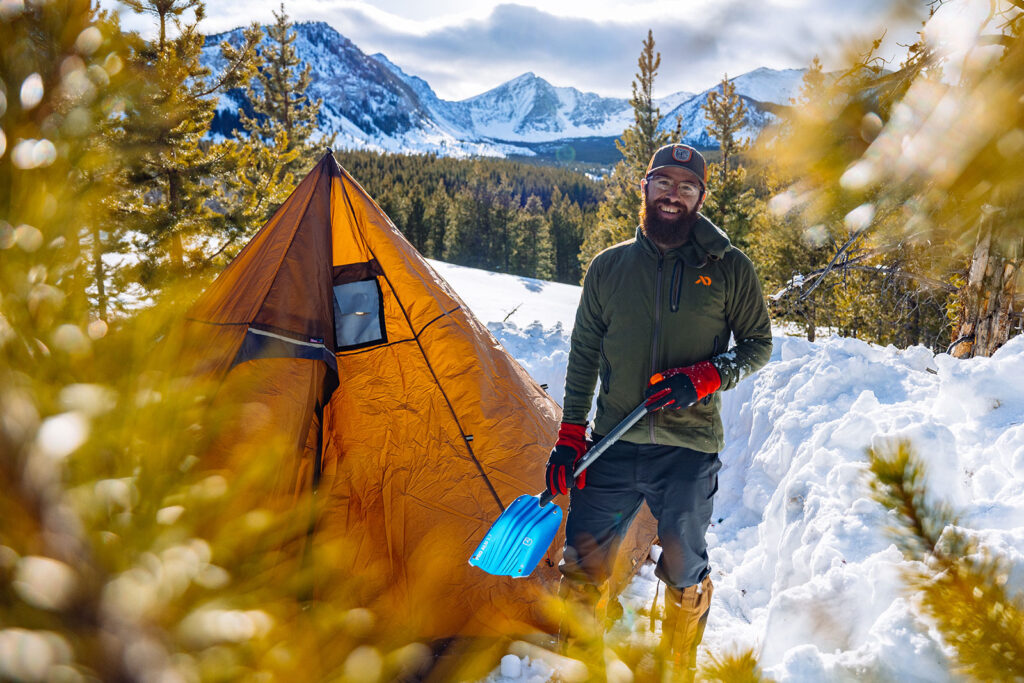
A sturdy shovel: We use avalanche-style snow shovels because they’re small, strong, and lightweight. Plastic shovels don’t hold up well in winter conditions.

Immediate warmth boosts morale: When you do get cold, having gear that provides immediate warmth matters. We always bring extra-warm puffies for quick heat boosts. And while we recommend camp chairs year-round, they’re a must in winter hot tent camping. Sitting higher in the tent lets you enjoy the stove’s heat more comfortably.

Camp Gear Recommendations

Silky saw or sven saw

Quality lightweight Ortovox Avalanche Shovel

Val highly recommends the Rab Neutrino Pro puffy (800-fill goose down). The warmth is instantaneous.

We both have the Helinox Chair Zero which weighs 1lb.

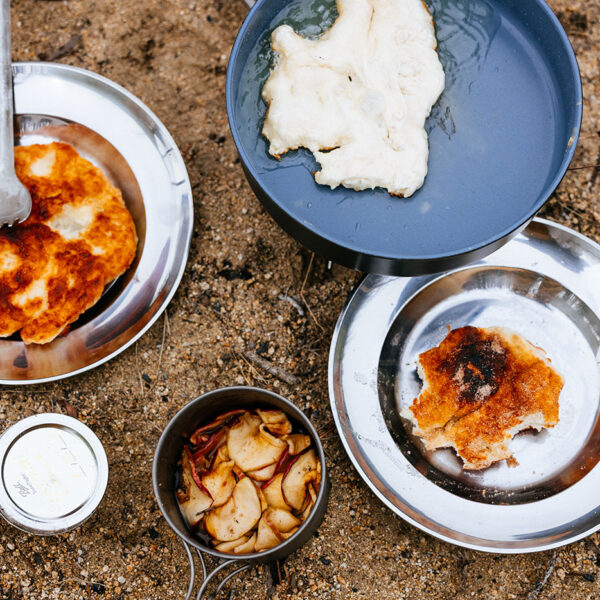
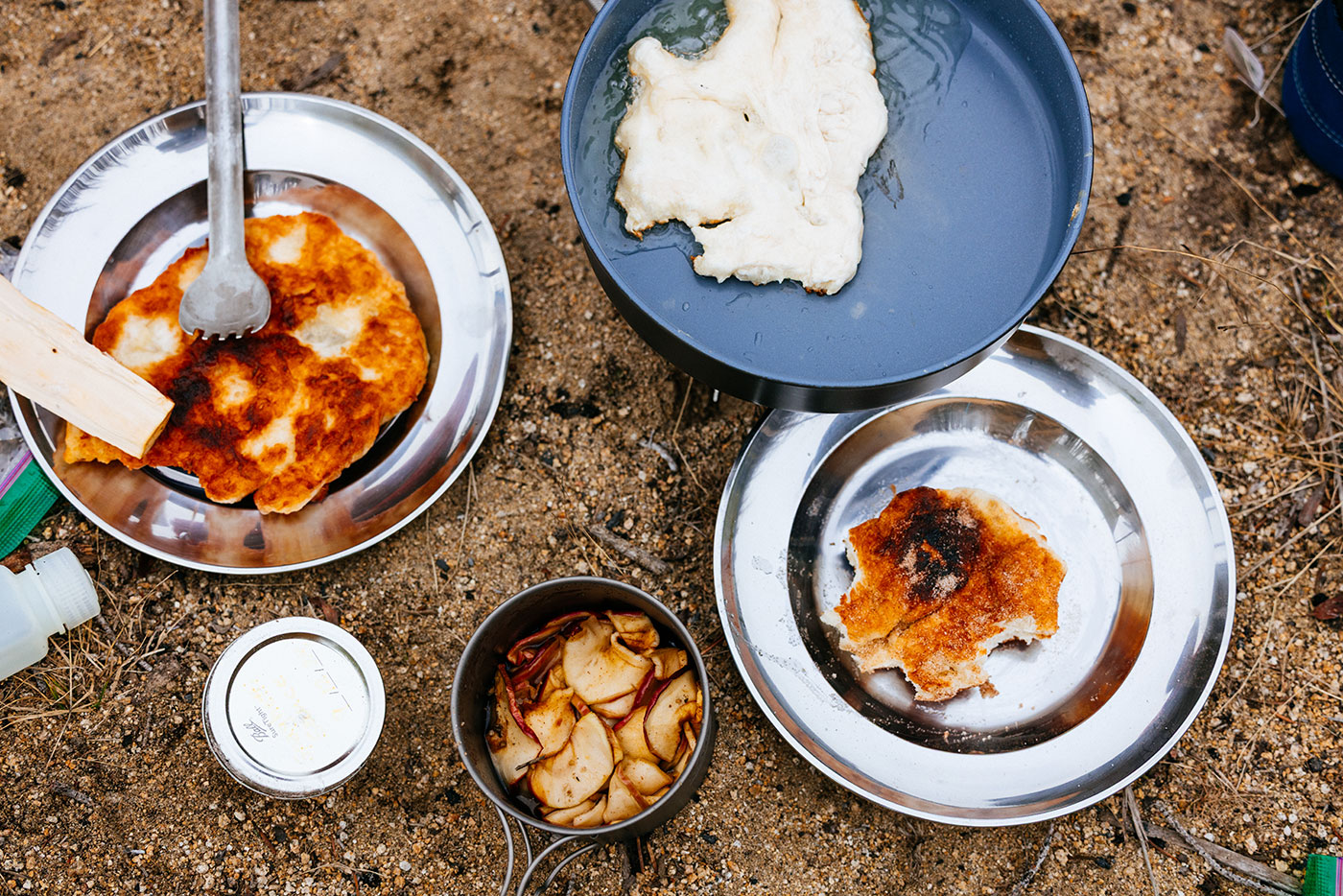
Fry bread with cinnamon sugar and rehydrated apples from Swansons Orchards in Hamilton
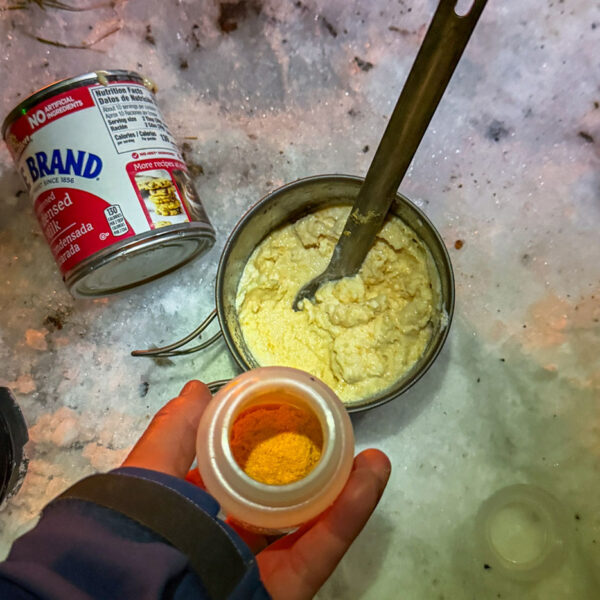
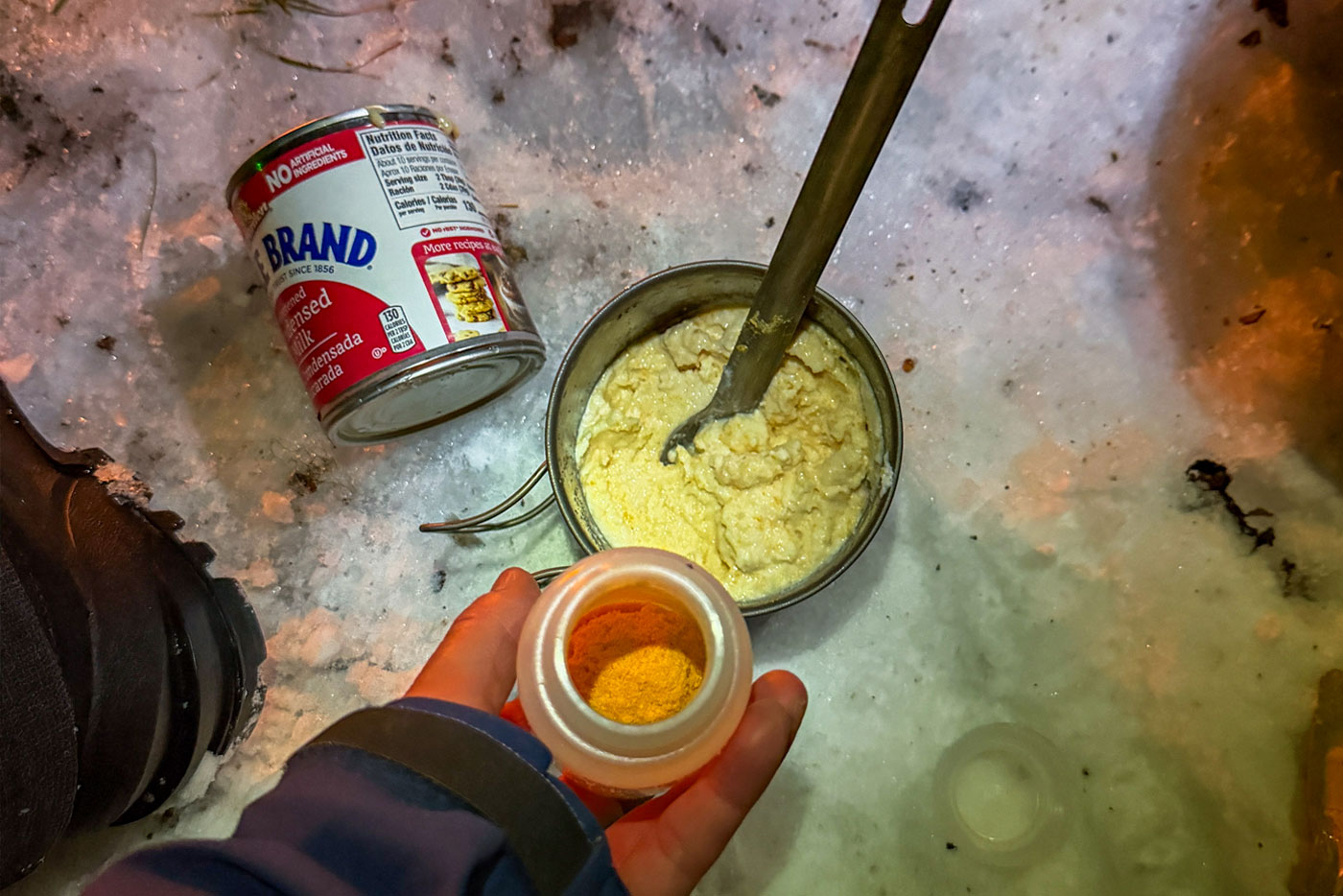
Snow ice cream with dehydrated and ground Dixon melon

Food, Warmth, and Morale

Winter camping burns more calories than summer trips.
One of the best parts of winter camping is a good meal. Thanks to Mitch, we eat homemade meals made with locally sourced ingredients. Much of our protein comes from wildlife he harvests in the fall, and we dehydrate extra vegetables and ingredients ahead of time.

Food is especially important in winter because you burn calories much faster than in summer. We aim for dinners in the 800–1000 calorie range. One of our favorites is a spicy peanut butter venison carnitas ramen dish (recipe coming soon).

Staying hydrated is harder in winter than most people expect.
Cold air is incredibly dry, and at elevation you lose moisture just by breathing. Add in the sweat from digging out a tent platform or hauling firewood, and it’s easy to get behind without realizing it. Even on a simple overnight, we make a point to hydrate regularly and usually bring a single electrolyte packet if we feel we need it.

Small treats go a long way in winter.
We also love bringing small treats to enjoy during the long dark hours: fry bread with cinnamon sugar or honey butter, muffin-in-a-pot, or snow ice cream with fun toppings (just make sure the tent is extra warm for that one). A good evening tea rounds things out nicely and helps settle in for the night.

Cookware Recommendations

Mitch likes to cook with the MSR Whisperlite Universal Stove & GSI Cookware.

We both like GSI’s trusty Infinity Backpacker Mug for coffee or tea.

Small Lessons That Made the Biggest Difference

  1. Always keep dry layers reserved for sleeping — socks are non-negotiable for us
  2. Firewood burns faster than you expect
  3. Moisture management matters more than adding insulation
  4. Comfort leads to better experiences; pack what supports that

Some of the links in this post are affiliate links which means if you make a purchase, we receive a small compensation at no added cost to you. Any purchases you make help keep this blog going and our content free. We truly appreciate your support!

Leave a Reply

Your email address will not be published. Required fields are marked *

Fill out this field
Fill out this field
Please enter a valid email address.

Festive Winter Hot Tent Camping in Montana