AdventuresGearHelpful

Yellowstone in March & April: What to Expect in Shoulder Season

Yellowstone in March and early April is the quiet in-between, and honestly one of our favorite times to go.

We’ve visited twice during shoulder season in March and April and the experience was completely different each time.

If you’re considering visiting Yellowstone in early spring, here’s what to expect including road access, wildlife, where to stay near Yellowstone, and what to wear.

A group of bison traveling along paths in the snow
Two bison moving through deep snow in Yellowstone, following a narrow packed trail across the winter landscape.

What Roads Are Open in Yellowstone in Early Spring?

In mid-to-late March, Yellowstone is still very much in winter mode.

The only road open to regular vehicles in winter months is typically the North Entrance to Cooke City corridor: Gardiner → Mammoth → Tower → Cooke City. This stretch of road stays open year-round and can still be a good time to see wildlife.

Before your trip, always check current road conditions through the National Park Service. On our March visit, we were limited to this northern corridor. By April, more roads had opened allowing us to visit more areas.

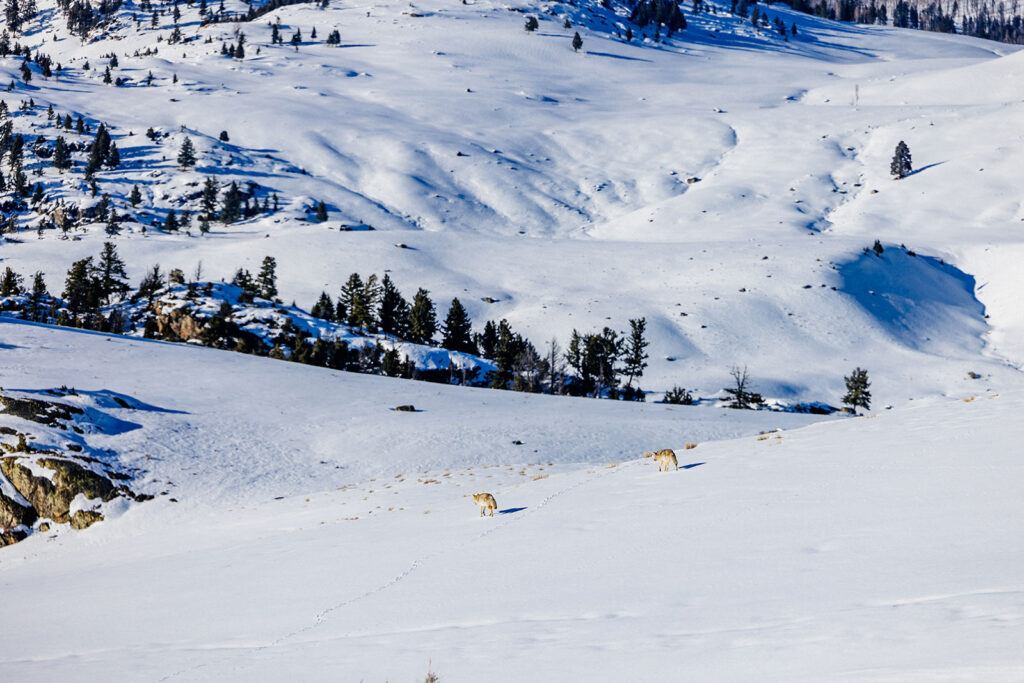
Coyotes traveling along the open hillsides along the north road
Two coyotes traveling across open hillsides along Yellowstone’s northern road, a common wildlife sighting in the quieter spring shoulder season.

March Visit: Skiing, Wildlife & Avalanche Season

Our mid-late March visit landed on the edge of seasons. Winter still owned the landscape, but afternoons hinted at change. The snow contrast this time of year makes everything stand out. Wildlife feels more visible and geothermal steam feels more dramatic.

Bunny rabbit poses on moss by the Mammoth Hot Spring terraces
A small rabbit perched on moss near the Mammoth Hot Springs terraces in Yellowstone during early spring.
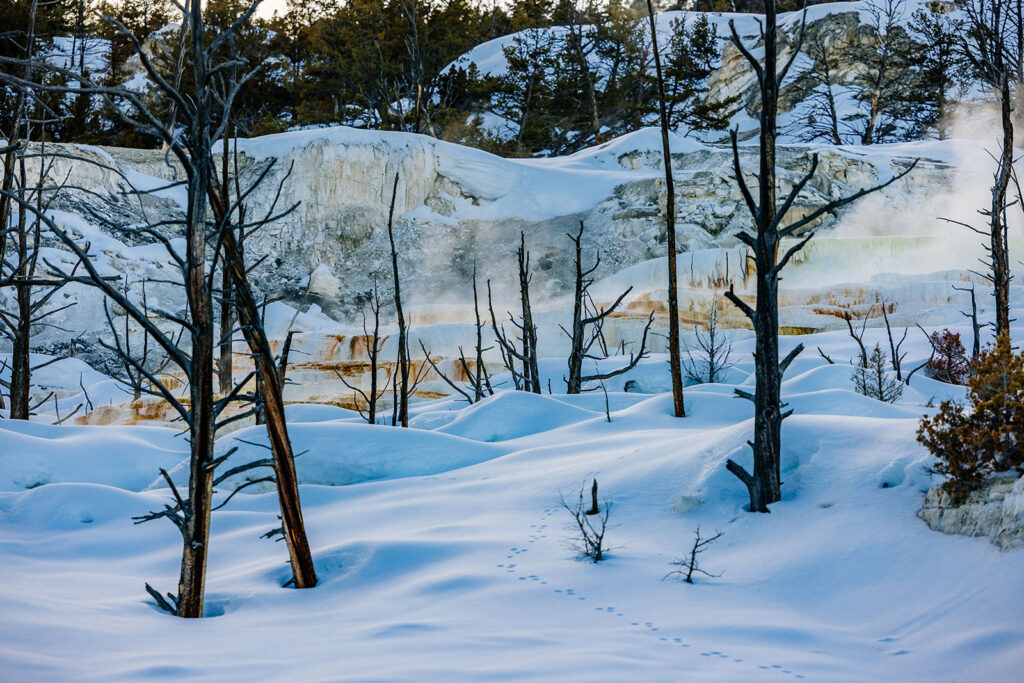
Mammoth Hot Spring terraces in the evening light with bunny tracks in the snow
Steam rising from the Mammoth Hot Springs terraces in Yellowstone, where geothermal heat creates dramatic winter landscapes of snow, mineral terraces, and bare trees.

Day One: Wildlife Along the Northern Range

We were greeted immediately by elk and bison upon entering the park at Gardiner. March tends to concentrate bigger wildlife down low, and it didn’t disappoint. Continuing the drive east along the North Road, we admired the snow covered Absaroka Mountains rising sharply in the distance.

The goal was to do some cross country skiing. We skied from the Soda Butte / Lamar River Trailhead along the Lamar River. Soon into our ski, we crossed fresh wolf tracks, large and defined. We didn’t get to see the wolves themselves, but the tracks were enough to stop us and hold a hand beside to admire the size.

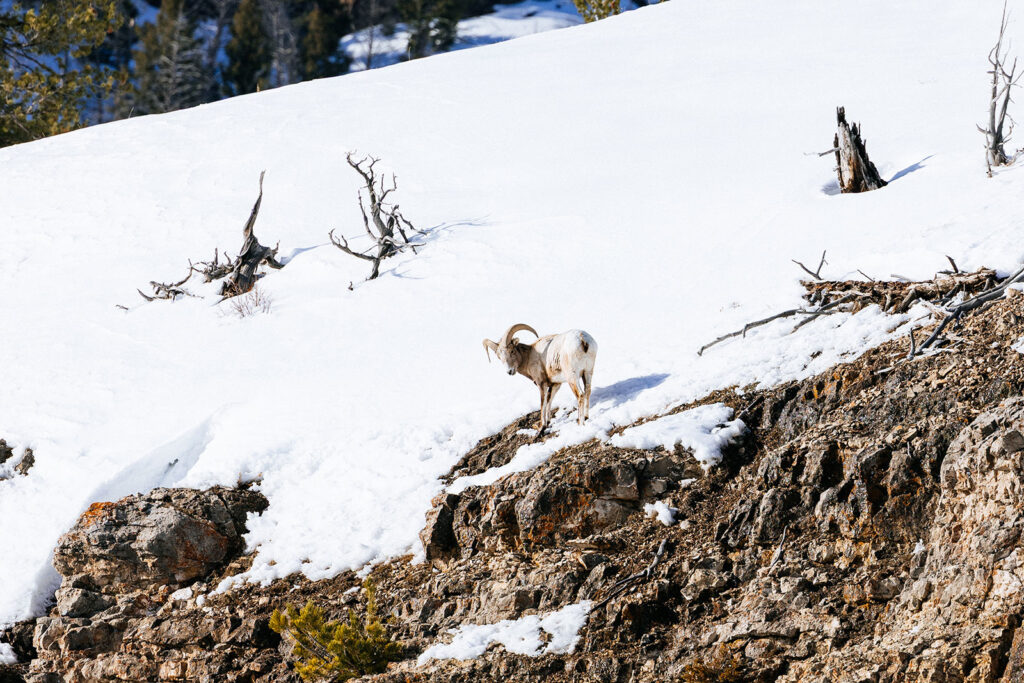
On our way back west, heading towards Mammoth Hot Springs, bighorn sheep were grazing the exposed vegetation atop some cliffs. Slightly further on, we saw several groups of coyotes moving through open meadows. (Coyotes are often mistaken for wolves. Coyotes are much smaller.)

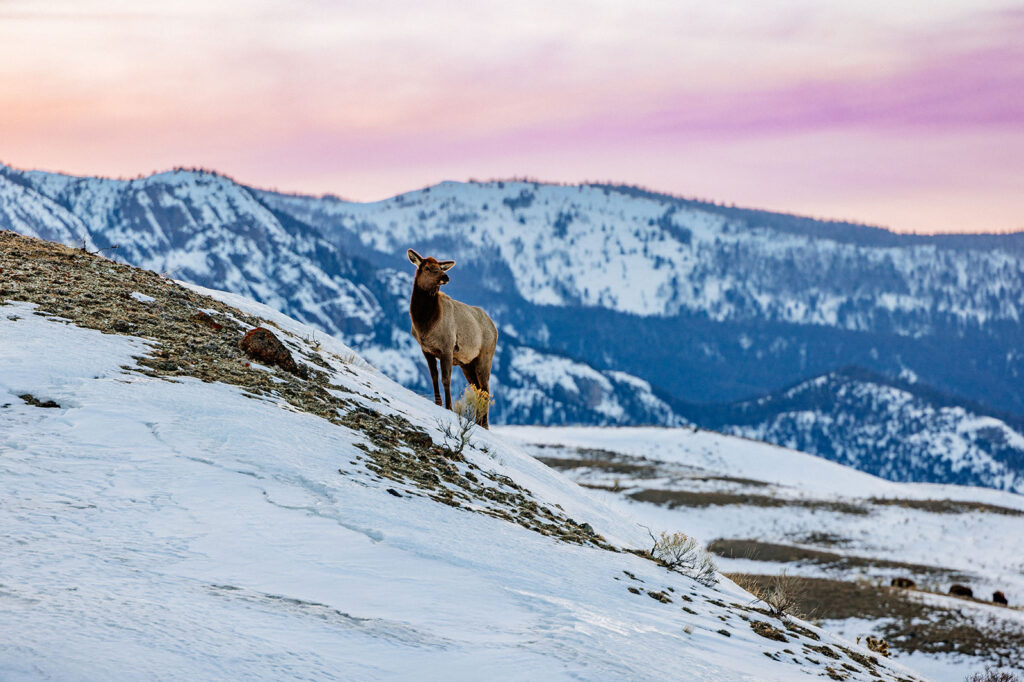
We ended the day at Mammoth Hot Springs with a slow sunset walk along the terrace boardwalk. The sky softened to pink, elk grazed on the hillsides, and bison greeted us down in the valley on our drive back toward Gardiner. A peaceful end to the day.

Wolf track size comparison beside Valerie's hand print in the snow
A large wolf track in the snow compared beside Valerie’s handprint, showing the impressive size of wolves found in Yellowstone.
Elk posing on a hill with soft pink skies and snowy mountains in the backdrop
An elk standing on a hillside beneath soft pink spring skies with snow-covered mountains in the background in Yellowstone’s northern range.

Day Two: Hellroaring

The next morning we planned to snowshoe from the Hellroaring Trailhead down to the suspension bridge above the Yellowstone River. While we were getting ready, a bison was slowly plodding down the road towards us. We realized we wouldn’t be able to get ready and far enough away before it reached us, so we hopped back in the car and let it pass before continuing to gear up. The trail was a bit steep, and had me question if it should be done in full on winter for avalanche risk, but the views of the sky blue river and snowy landscape were stunning.

Later when we were back in the car, we noticed a recent avalanche about a mile from the road. A clean break in the snow across a hillside that we’re pretty sure happened while we were out. A reminder that winter isn’t done just yet.

We finished the afternoon skiing the Snow Pass Ski Trail above Mammoth. It was firm and a little icy, but still good to be moving. Steam drifted across the landscape in the distance, and that mix of snow, wildlife, and geothermal energy felt distinctly Yellowstone.

Bighorn sheep foraging the exposed clifftops
A bighorn sheep navigating a rocky, snow-covered hillside in Yellowstone’s northern range, where wildlife often appears along exposed cliffs in early spring.
Small avalanche seen from the north road
A small avalanche visible on a steep snowy slope in Yellowstone’s northern range, a reminder that winter conditions often persist into early spring.

March Visit Highlights:

  • Elk concentrated on the hills near Mammoth Hot Springs
  • Bison herds tunneling through snow
  • Wolf tracks along the Lamar River
  • Bighorn sheep and multiple coyote sightings on the way to Cooke City
  • Dramatic snow contrast that makes wildlife and geothermal springs pop visually
  • A fresh avalanche visible from the road
Boardwalk winding through the steaming geothermal landscape of Norris Geyser Basin in Yellowstone National Park.

April Visit: Spring Arrives & More of the Park Opens

On our April visit, we were lucky: additional roads had just opened the day before for spring, allowing us to travel south of Mammoth and explore areas like Norris Geyser Basin and revisiting the Artist Paint pots.

Spring in Yellowstone is unpredictable. You may still encounter snow, but the sun can also be intense enough to need sunscreen.

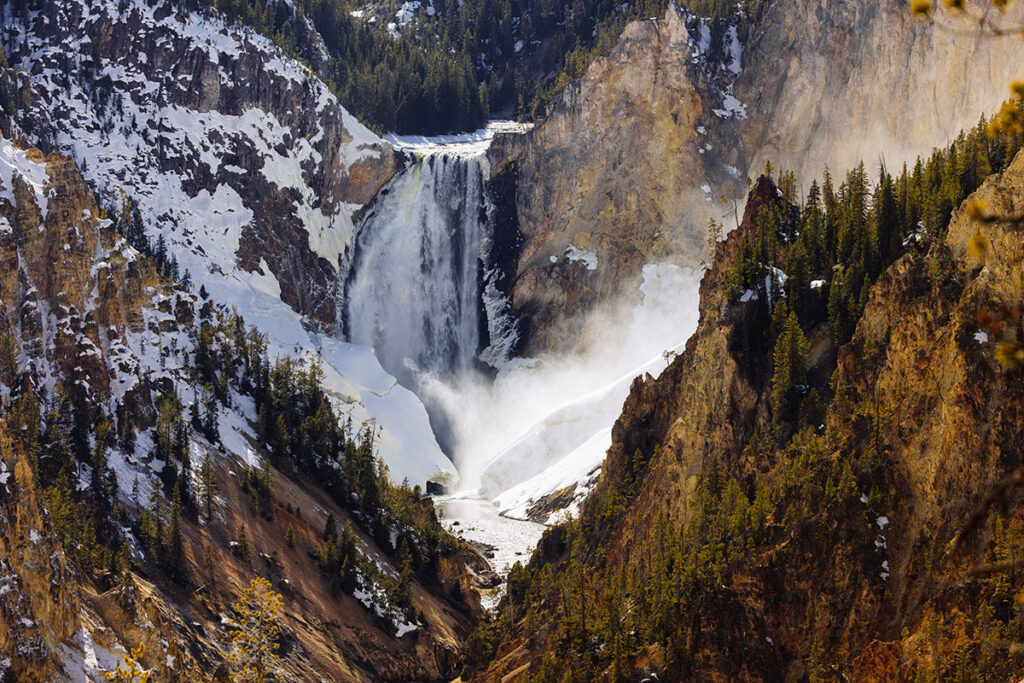
Lower Yellowstone Falls cascading into the Grand Canyon of the Yellowstone with snow lingering along the canyon walls in early spring.

Day One: Wolves Along the Northern Range & Yellowstone Falls in Spring

We started the morning with a wildlife drive along the North Road. As the day unfolded, we saw bison, bighorn sheep, and wolves in the distance. The wolves were visible only through binoculars and with help from generous wildlife enthusiasts who had spotting scopes set up roadside. Yellowstone in spring draws a quiet, patient crowd of observers scanning ridgelines together.

We took in some waterfalls starting with Wraith Falls to stretch our legs. From there, we checked out Undine Falls (roadside), and then continued to Yellowstone Falls. It’s an essential stop regardless of season for how beautiful it is. We recommend bringing a snack, lunch, or warm beverage to sit and really enjoy the view.

Later in the afternoon, we parked near a recent wildlife kill, hoping a grizzly might emerge to feed. We waited, glassed the hillsides, and watched for movement but nothing materialized. Even so, the hope and guesses of what will happen were fun.

A black bear mother and cub emerging from their den in Yellowstone National Park during early spring.

Day Two: Red Dogs, Bear Cubs & a Day of Wildlife Watching

We woke for sunrise to return to the bison kill hoping to see a grizzly appear. Instead, we were distracted by scenes of elk grazed quietly beneath a half-illuminated moon, and Electric Peak held soft pastel tones in the distance. Yellowstone doesn’t always deliver spectacle, sometimes it delivers atmosphere.

We didn’t see a grizzly at the bison kill, but we did see one further by Lamar Valley far in the distance. Observers there before us said it appeared to be chasing red dogs (baby bison). We watched a red dog and its mom running down from the distant hill where the grizzly was. The grizzly seemed to be focused on a bison standing firmly on top of the hill, but ultimately it ran over the hill and out of sight.

Wildlife continued to shape the day. We saw pronghorn not far from the road and eventually returned to stake out the black bear den again. Patience paid off, and we were rewarded with nearly 30 minutes of the cubs climbing logs, tumbling in the sun, and lingering outside their den. Wildlife viewing often requires waiting. Sometimes an hour or more, but when it unfolds like that it’s unforgettable.

With more roads now open, we drove south to revisit the Artist Paint Pots. We continued to Norris Geyser Basin, which became one of our favorite geothermal areas in the park. Walking the boardwalks in early season felt spacious and quiet, steam rising into cool air. At one point, we noticed bear tracks in a pool just below the boardwalk. A subtle but thrilling reminder of how present wildlife is, even when unseen.

On the drive back toward Gardiner, we spotted a curious fox near the roadside and, as always, more bison scattered across the valley.

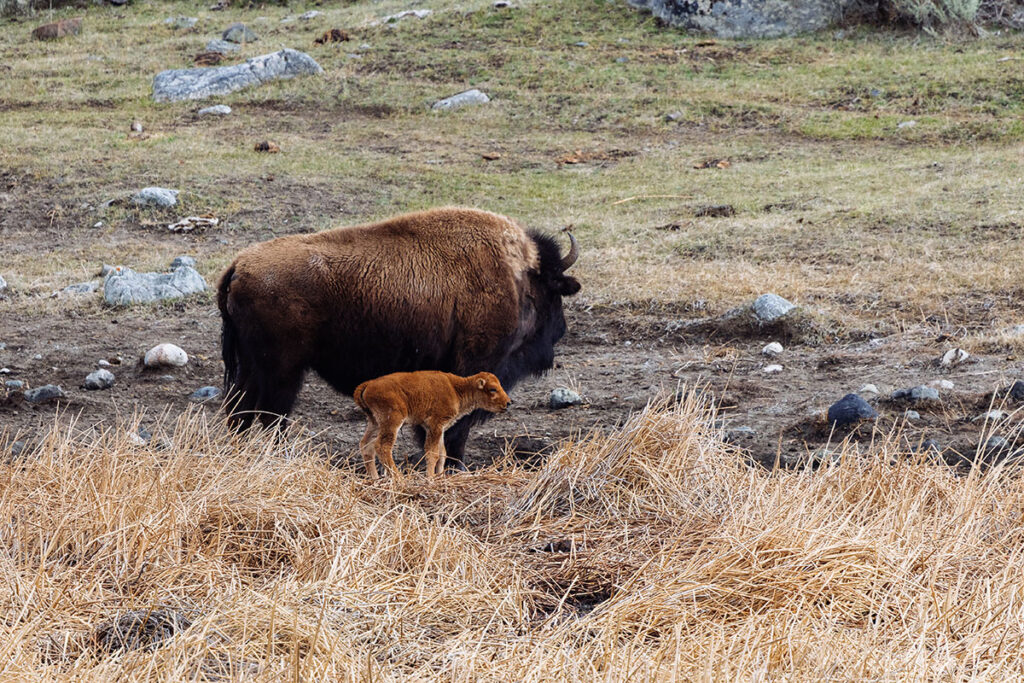
A newborn bison calf, known as a red dog, standing beside its mother in Yellowstone’s northern range.

Day Three: A Final Morning With Wolves and Bison

We drove into the park one last time before heading home and had a close view of another red dog and bison herd. It was exactly what we had hoped to see. Not long after, a sleek black wolf moved along the edge of the group. The wolf’s movement felt almost playful as it was quick, light, and curious. Though the bison remained alert and unimpressed. The interaction was brief but fun to watch.

On our way leaving the park, we stopped one last time to view the black bear family and they gave us the best goodbye showing we could have asked for.

Highlights:

  • Mama black bear and two cubs near their den
  • Multiple wolf packs spotted along the North Road
  • First red dog (baby bison) of the season
  • A black wolf circling near a bison herd
  • Grizzly tracks at Norris Geyser Basin
  • Dawn views of elk beneath a half moon and Electric Peak in the distance
  • A roadside fox sighting

Watch Our April Yellowstone Visit:

What to Pack for Yellowstone in March & April

Spring conditions in Yellowstone can shift quickly between sun, wind, and snow, so layering is key.

Base Layers (Merino Wool)
We both rely on merino wool base layers because they regulate temperature well and don’t hold odor after long days outside. We rotate between brands, but have been really happy with Ridge Merino. It’s worth double checking the technical specifications on other brands because some advertise as merino, but are actually merino wool blends and don’t work as well. The product should be above 95% merino.

Mid Layers
For movement, typically a lightweight insulated jacket works well. It adds warmth without feeling bulky.
For less movement and some wildlife stakeouts, we also add a puffy to trap heat efficiently. We’ve found Rab to make the warmest puffy jacket. The Microlight is pretty ideal, with the Neutrino being an extra warm option for really cold days.

Wind and Waterproof Shell
Spring weather in Yellowstone can shift quickly between sun, wind, snow, and rain, so having a waterproof shell helps protect your insulation layers underneath. We’ve had good experiences with Outdoor Research, which tends to make durable and reasonably priced shells. Mitch regularly uses one of their shell jackets in winter conditions and it’s held up well in wind and snow.

If you plan to spend longer periods standing still for wildlife viewing, or get out for activities like cross-country skiing, snowshoeing, or hiking, shell pants can also be helpful for blocking wind and snow. We both use Outdoor Research shell or soft shell pants in colder conditions and have been impressed.

View Outdoor Research Shell Jackets

View Outdoor Research Shell Pants

Where to Stay for Yellowstone Shoulder Season

West Yellowstone and Gardiner are both close entrances for us. We prefer staying in Gardiner for how quiet it is and the activities accessible nearby. West Yellowstone is larger and has more restaurants and lodging options, but  access to the park by personal vehicles may be more limited. Both entrances offer Snowcoach tours to get further into the park.

We’ve stayed in VRBO / Airbnbs on both visits and appreciated having some basic cooking options since most of the restaurants are closed.

Browse lodging options near Yellowstone:

Where We Ate in Gardiner

Even in shoulder season, we had a couple of reliable favorites:

Small towns in shoulder season have limited hours, so always double-check seasonal schedules.

Some of the links in this post are affiliate links which means if you make a purchase, we receive a small compensation at no added cost to you. Any purchases you make help keep this blog going and our content free. We truly appreciate your support!

Leave a Reply

Your email address will not be published. Required fields are marked *

Fill out this field
Fill out this field
Please enter a valid email address.

Hot Tent Camping Gear for Winter: What Actually Works in Montana