I had the idea for a 30-day Maud challenge years ago. Maud S Canyon is a short drive from my house in Butte, Montana, and its rocky, hilly loop makes for a solid workout. I meant to stop at 30, but stopped at 33.
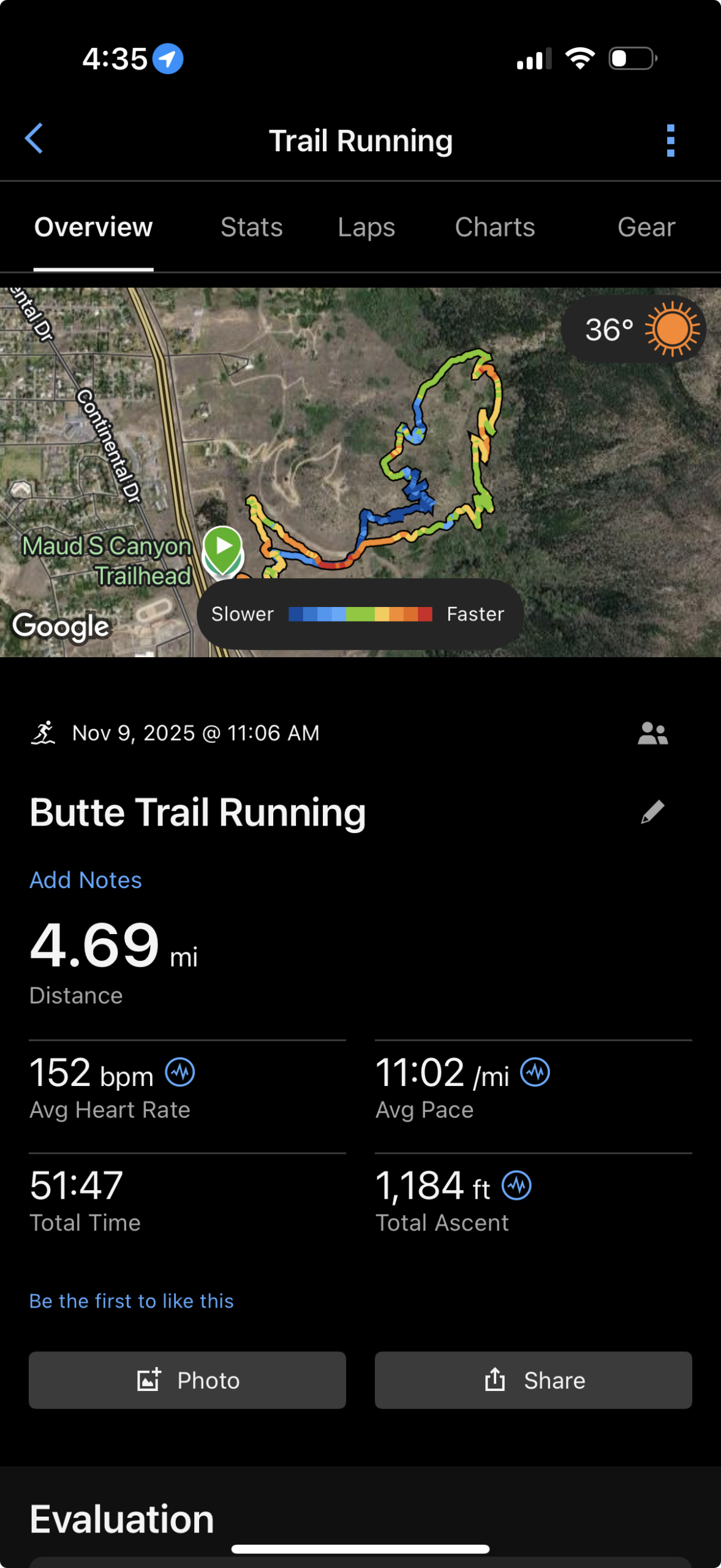
The Loop at a Glance
- Distance: 4.7 miles, about 1,000 feet of gain
- Surface: coarse sand, rock, and gravel
- Time: about 52 minutes running, 1:30 to 1:45 hiking
- Setting: a south-facing canyon at the base of the Continental Divide, so it stays drier than forested trails
- Trailhead: an open, exposed lot, usually with a few other cars since it’s a popular hike
Why?
Mostly, I was curious. Could I stick with it? How would it change my fitness and my mood? Could I keep an exercise routine mostly outdoors in a natural environment instead of in a gym?
That last one had been on my mind. As temperatures dropped and daylight hours decreased, I’d transition to the treadmill because it felt easier. But I liked the idea of getting my exercise outside for fresh air, vitamin D, and especially an alternative to running in place indoors.
The only problem? I despise being cold. As November arrived, I committed to 30 consecutive days on Maud. I’d run most days, with the option to hike when I felt like my body needed a lower-impact day.
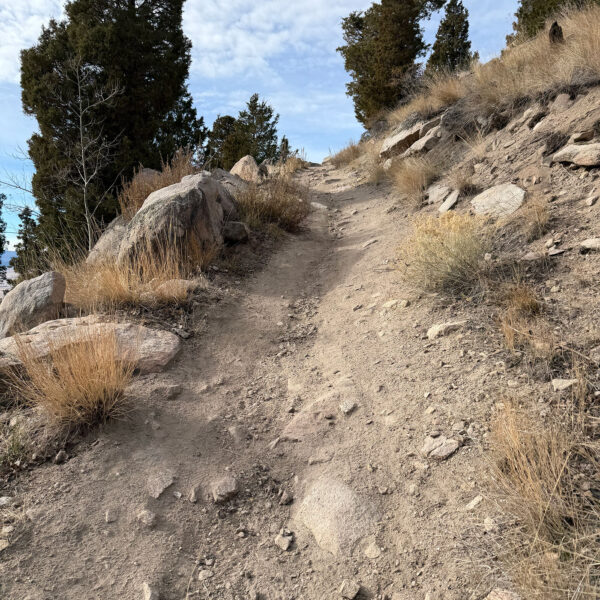
One of the climbs I learned to anticipate, complete with rocky footing that demanded my attention.
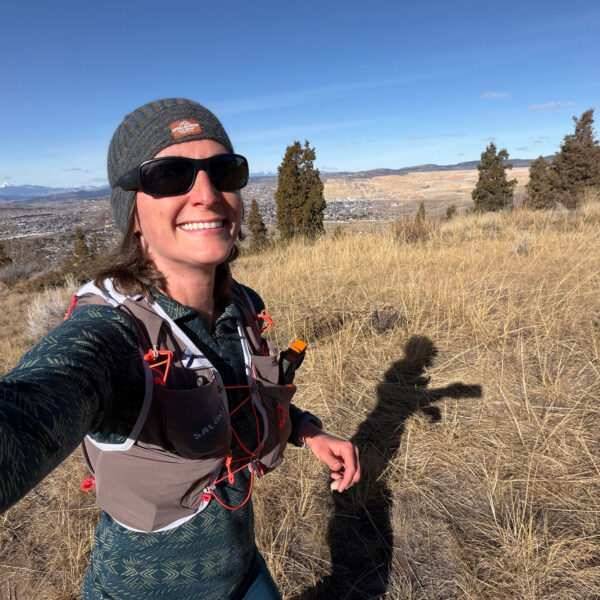
Some days brought sunshine and dry trails. Others were a completely different experience.
How the Trail Changed
Would I Get Bored?
A friend asked whether running the same trail every day got boring. I’d wondered the same thing, but surprisingly it didn’t. Maud’s rocky, uneven terrain keeps me focused on where I’m putting my feet. At the same time, my mind is free to wander through whatever I’ve been thinking about. Between navigating the trail and getting lost in thought, I never really found myself bored.
Running the same 4.7-mile loop every day also gave me an opportunity to learn it in a way I hadn’t before. I developed my own running landmarks. The long climb from the railroad tracks to the big boulder and sharp turn. The steep switchbacks approaching the first bench. The last hill along the ridge before descending toward the creek. I knew which hills would test me, where I could pick up my pace, and where to hold back. The climbs didn’t necessarily become easy, but I became better at anticipating them.
How Would Conditions Affect Motivation?
While the route stayed the same, the conditions certainly didn’t. The winter of 2025–26 started mildly, but there were frosty mornings, fog, wind, and eventually snow. Some of my favorite runs were on gloomy days when fog obscured familiar views and frost covered the canyon. The trail I’d come to know so well could suddenly feel like somewhere new.
Snow brought its own challenges. Finding traction on uneven ground took more attention, and running through fresh snow required noticeably more effort and care. I also learned that the first five minutes in the cold were usually the worst. Once I warmed up, I was surprisingly comfortable.
One Memorable Night Run
Then there was the night I ran Maud in the dark. Mitch had gotten an elk, and I’d spent the day helping him haul it out. By the time we got home it was twilight. But the challenge doesn’t take a day off, so I went out. There’s nothing quite like rounding a corner in the dark and seeing pairs of eyes reflecting back at you. A little adrenaline-inducing in the moment, even if they turned out to be deer.
When 30 Days Became 33
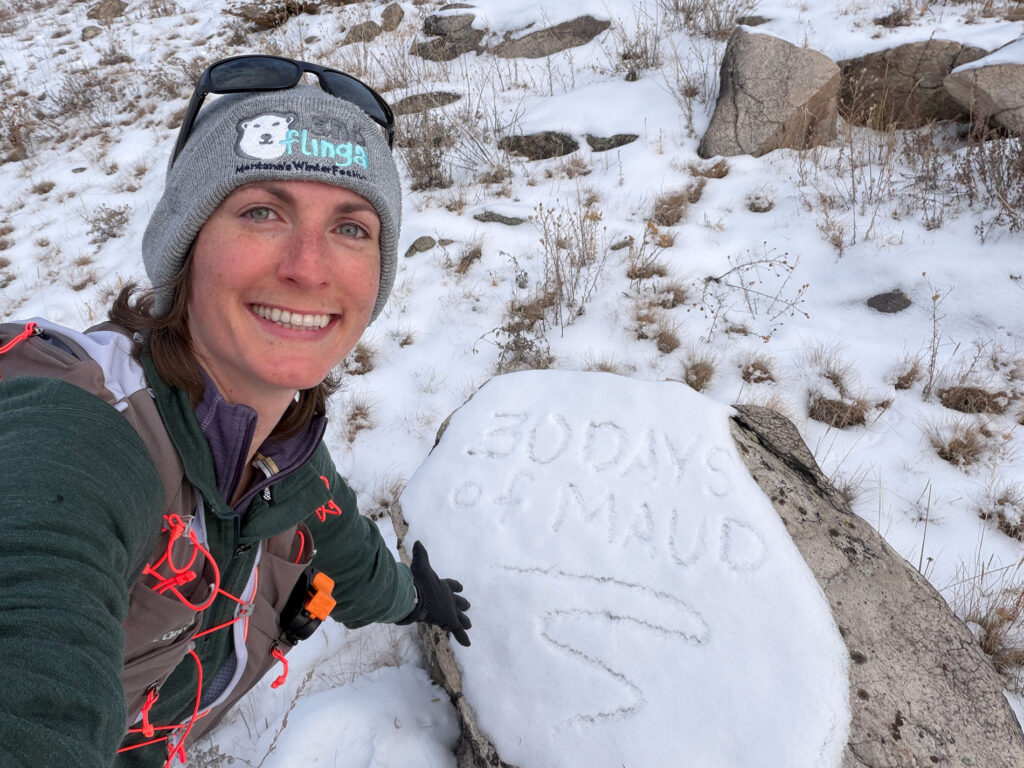
When I hit day 30, I kept going. Maybe I wanted to make up for the few days I’d hiked instead of ran or maybe I just wasn’t ready to stop. Regardless, I finished on December 4 completing 33 consecutive days on Maud. By then, it had become part of my routine, and taking a break felt stranger than getting started.
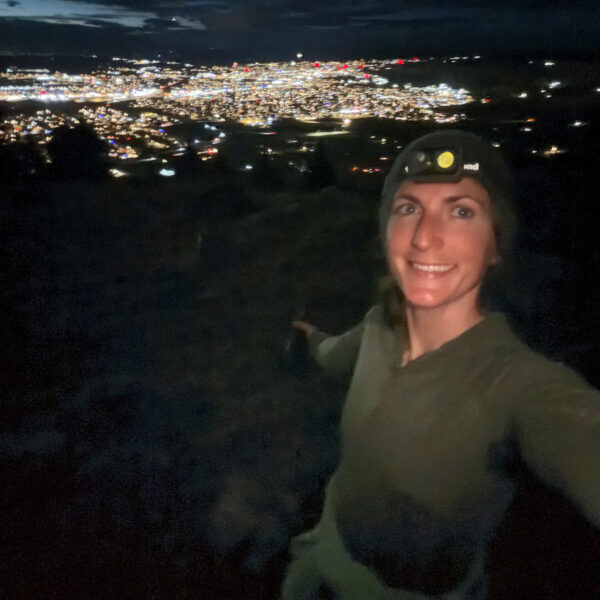
After a long day helping haul out an elk, I still had a loop to complete.

Nothing quite like rounding a corner in the dark and finding several pairs of eyes staring back at you!
What 33 Days Taught Me
I Can Run in Winter
I’d spent years defaulting to indoor exercise as temperatures dropped, but once I figured out how to dress for the conditions, I realized I could be surprisingly comfortable outside. I also learned when to adjust my effort. When temperatures dip below 10°F, for example, I avoid pushing too hard on the steep sections. Winter running doesn’t have to be an all-or-nothing thing. It’s about figuring out what works and not being too hard on myself.
I Looked Forward to the Routine
Once I settled into a rhythm, I started looking forward to my daily run as much for the mental reset as the exercise itself. Something about moving at that pace works well with my mind. Thoughts or decisions that felt tangled earlier in the day would unravel more easily out on the trail. 100% of the time, I returned home with a clearer head and in a better mood than when I started.
Weather is Part of the Experience
Unlike the gym, Maud didn’t keep out the weather, and being out in it turned out to be part of the fun. Windy days were a good example: Running into it, you feel like you’re fighting it. Running with it, it feels like it’s carrying you. I started playing with it instead of fighting it, and somewhere in there I felt like a part of the environment instead of just trudging through.
The Days I Least Wanted to Run
The gloomy days were often the hardest to get motivated for, but they also brought the biggest improvement in my mood. Some of my favorite runs ended up being the ones I least looked forward to.
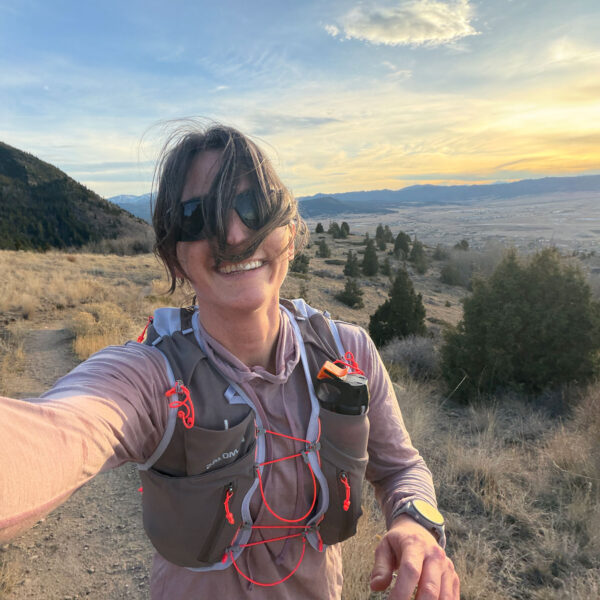
Sometimes the wind worked against me. Other times, it carried me along.
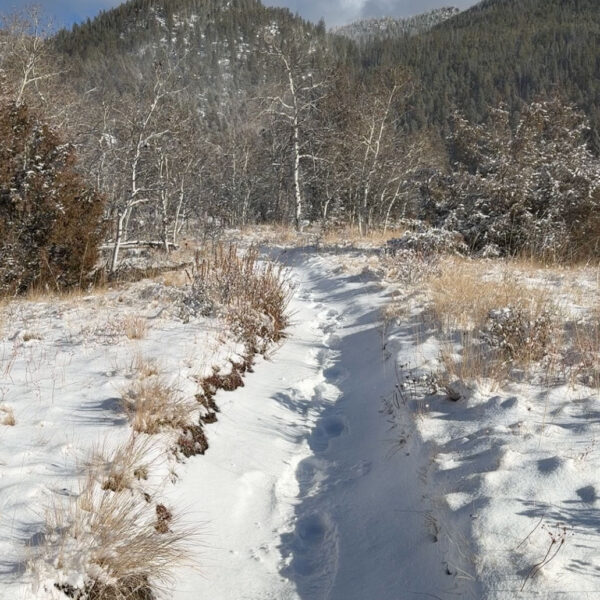
A little snow changes the footing, even on familiar terrain.
How to Try Your Own
If you want to run a repeat-trail challenge of your own, here’s what I’d pass along:
- Pick a trail you can finish in an hour or less. Mine was about 53 minutes. Short enough that “I don’t have time” stops being a valid excuse.
- Choose a trail close to home. The less driving involved, the less there is to talk yourself out of.
- Decide up front what counts. I allowed a few hiking days I felt like I needed lower impact. Know your rules before day 12, not on it.
- Take notes. I made voice notes during the run. The small observations are the whole point, and you will forget them.
- Don’t wait for good weather. Looking back, the worst weather days gave me the biggest mood changes.
- Expect the trail to change your perspective in unexpected ways.
A Year Later
With November approaching I’ve already settled back into my winter running routine on Maud. This time I know what to expect, how to dress, and how to adjust to the conditions.
If I’m honest, I wasn’t particularly excited about returning to the same trail again but once I began, I’m reminded how much I enjoy it. I’m also noticing the familiar mood lift from getting outside midday as the days get shorter. It’s still early in the season, but I’m curious to see what else I’ll discover.
01.
100% of the time, I came home from Maud feeling better than when I started.
02.
The wind made me feel like part of the landscape. Sometimes it blew against me, making the run more of a struggle. Other times, it pushed me along.
03.
Some days, getting out the door was harder than the run itself.
What I’d Wear and Bring for Winter Trail Running In Montana
We only recommend gear we’ve personally used and trust in the backcountry. Some links are affiliate links, which means we may receive a small commission if you make a purchase, at no additional cost to you. Your purchases help support Backyard Montana and the work we share. 1% of our annual gross revenue is donated to organizations working to protect Montana’s land, wildlife, and public access.
Recommended Winter & Shoulder Season Trail Running Gear for Women
I tend to run cold, so these are the layers and gear that work for me during Montana’s shoulder seasons and early winter. I adjust what I wear depending on the temperature, wind, and how hard I’ll be running.
Suggested pack list: